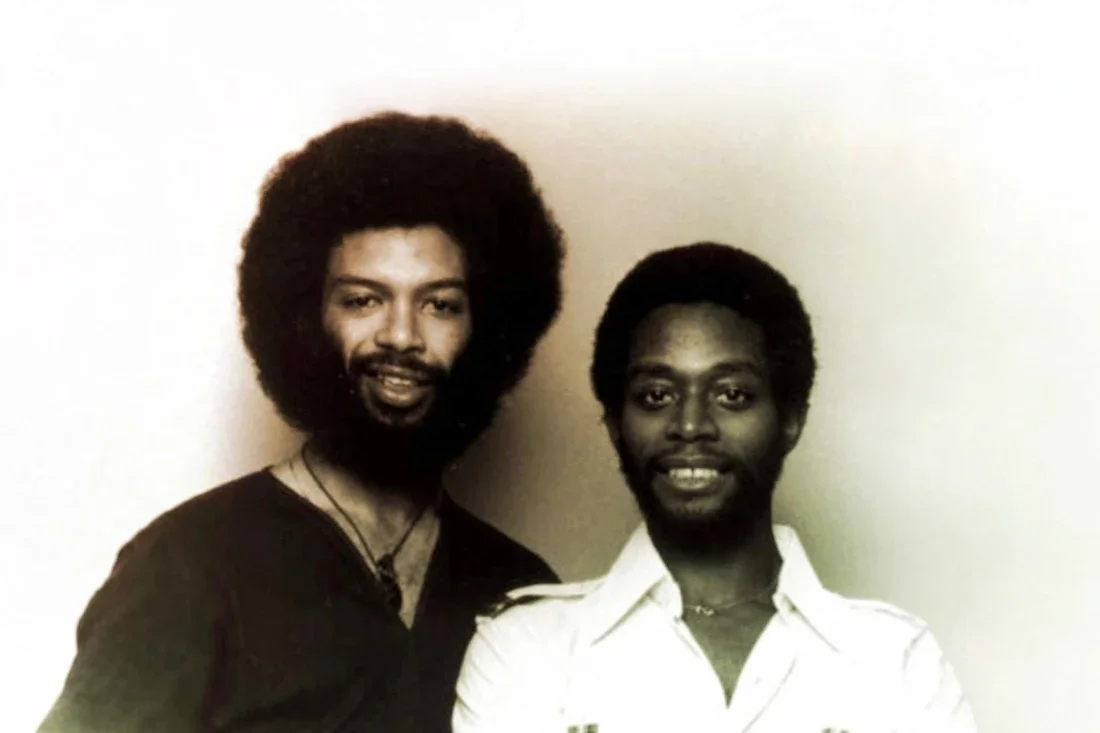
Gil Scott-Heron By Brian Jackson & Yasiin Bey at The Royal Albert Hall: Show Review
It takes a great poet, perhaps the greatest poet of the 20th century, to get into the essence of a thing and describe it from the inside to those on the out, a mastery that Brian Jackson so highly attributes to the late Gil Scott Heron. More than 55 years after Brian and Gil first forged their bond as musical partners and friends, Mr Jackson, on his 74th birthday, stands at the helm of London’s Royal Albert Hall alongside Yasiin Bey, to reinterpret, honour and carry forward the legacy of the great poet and polemicist, Mr Gil Scott-Heron.
As much as tonight is a celebration of life, poetics and music, the observations made some 50 years ago remain as pertinent as ever. The cyclical nature of oppression and violence, forewarned by Gil and Brian in the ’70s, echoed by Yasiin in the ’90s, and brought full circle by their coming together in 2026, reminds us how little has changed and underscores the enduring necessity of political potency through poetics.
Bey’s role in the production is never one of mimicry or tribute; rather, he becomes a vessel for expression, tempering his usual persona out of respect for the material though never sacrificing his individuality. Yasiin and Brian seem equally enthralled by the prospect of sharing a stage. United by their concealment of radical sociopolitical critique beneath the veneer of popular music, “Home Is Where The Hatred Is” is to Jackson and Scott-Heron is what “UMI Says” is to Bey.
“You will not be able to stay home, brother, You will not be able to plug in, turn on and cop out” are the opening words of Bey, as he introduces Scott-Heron’s declamatory magnum opus “The Revolution Will Not Be Televised”. The ballad’s cultural relevance continues to reverberate across generations, most recently resurfacing in Paul Thomas Anderson’s “One Battle After Another”, an anti-establishment film whose critique of power emerges from within the Hollywood system itself.
The balance of brooding pessimism juxtaposed by hope runs rampant throughout Gil and Brian's work, most tangible on “Winter In America” which Jackson introduces by asking the audience, “What season comes after Winter?”. On the original recording from 1974, Gil prefaces the track with his view that “Lately there has been no spring, no summer and no fall, politically, philosophically and psychologically”, Jackson, however, appears to challenge this reading, reclaiming the track as an expression of hope rather than grief. As he puts it “One of the few things in life we cannot change, is the change of seasons”.
Brian’s optimism transforms the writings of Gil, even during his darkest works. “Home Is Where The Hatred Is” and “The Bottle”, where critiques on systemically driven alcoholism and drug addiction, become emphatic and joyous when met with his flute and Fender Rhodes piano.
Following “It’s Your World”, Gil’s 1976 uplifting freedom anthem, Yasiin takes the opportunity to perform his very own freedom anthem. “Umi Says” taken from his 1999 album “Black On Both Sides", a blatant plea for freedom which he reappropriates to suit the current state of affairs in Palestine, Sudan, Congo and anybody facing oppression, asserting that “Freedom is everybody's job”.
This wonderful and thought-provoking celebration of the extraordinary Gil Scott-Heron, set beneath the grandeur of this historic venue, was made all the more special by a surprise birthday cake, lovingly delivered by Brian’s twin son and daughter, accompanied by a heartfelt rendition of “Happy Birthday” from Victor Brown of the Midnight Band.